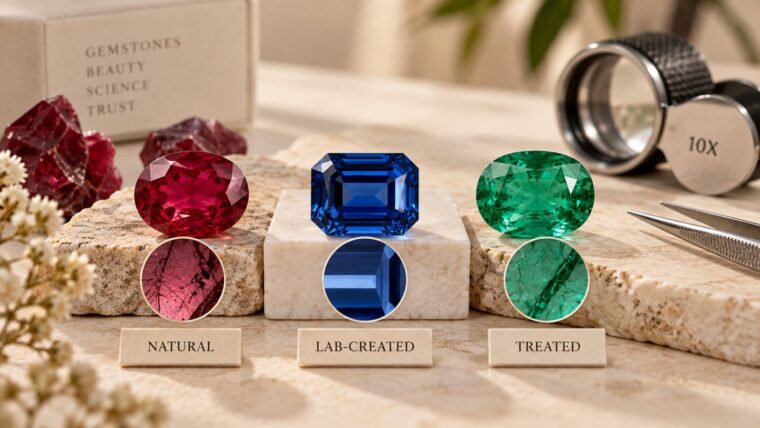
Natural, Lab-Created or Treated
Three words decide most of what you pay for a coloured stone. Here is how to read them.
Read the Article : Natural, Lab-Created or TreatedPopular Stones
Quick Links
Which gemstone ring suits a man best? Compare ruby, sapphire, emerald, aqeeq and turquoise on durability, colour and care before you buy.
The best gemstone ring for a man is the one that survives his week. A ring is knocked against desks, door handles and steering wheels every day, so the stone has to be hard enough for the life it will lead. Colour and meaning matter, but durability comes first.
This guide compares the seven stones men buy most often, explains which suit daily wear, and ends with a short checklist to use before you pay for any ring, from us or from anyone else.
Ask one question before you look at a single ring: will you wear it every day, or on occasions?
Gemstone hardness is measured on the Mohs scale, from 1 (talc) to 10 (diamond). Household dust contains quartz, which sits at 7. A stone below 7 will slowly pick up fine scratches from ordinary dust; a stone above 7 will not. That single number explains most of the advice in this guide.
| Stone | Hardness | Daily wear |
|---|---|---|
| Ruby | 9 | Excellent |
| Sapphire | 9 | Excellent |
| Emerald | 7.5–8 | With care |
| Aqeeq | 6.5–7 | Very good |
| Garnet | 6.5–7.5 | Good |
| Peridot | 6.5–7 | With care |
| Turquoise | 5–6 | Occasional |
Hardness is on the Mohs scale. Birthstones: garnet for January, emerald for May, ruby for July, peridot for August, sapphire for September and turquoise for December.
Ruby is second only to diamond in hardness, so it shrugs off daily knocks. A deep red stone in a heavy silver or gold setting is the classic men’s gemstone ring. Expect natural rubies to show small internal marks; a stone that looks flawless at a low price is usually glass-filled or lab-grown. See our natural ruby rings for men.
Sapphire is the same mineral as ruby in a different colour, with the same hardness. Blue is the best known, and yellow sapphire is popular too. If you want one ring to wear for thirty years without thinking about it, choose sapphire. Browse natural sapphire rings for men.
Emerald is hard but brittle, and almost every natural emerald has internal fractures that jewellers call the garden. A sharp blow can chip it. Pick a setting where metal surrounds the stone, such as a signet or bezel, and take it off for rough work. Browse natural emerald rings for men.
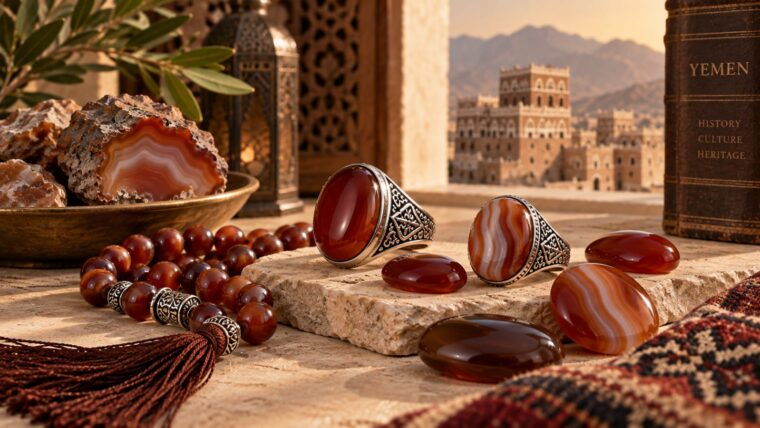
Aqeeq is the Arabic name for agate and carnelian. It has no fracture planes, which makes it tougher in practice than its hardness number suggests, and it takes engraving well. Yemeni aqeeq in deep red and brown is the most sought after, and aqeeq rings have been worn by Muslim men for centuries. Browse Yemeni aqeeq rings for men.
Garnet gives a dark, wine-red look at a lower price than ruby. Peridot is one of the few stones that comes in only one colour, a fresh olive green. Both suit regular wear and both show fine scratches after some years, which a jeweller can polish out. Browse garnet rings and peridot rings.
Turquoise, known as feroza, is soft and porous. Water, soap, sweat and perfume can dull or darken it over time. Keep it for occasions, put it on last and take it off first, and it will keep its colour. Browse feroza rings.
The same stone looks very different in different settings. Four styles cover most men’s gemstone rings.
If you work with your hands, choose a low signet. If the ring is for evenings and occasions, any style will last.
The stone is half the ring. The metal and the setting decide how long it lasts and how it feels on the hand.
A bezel or signet setting wraps metal around the edge of the stone and protects it from side knocks. It is the best choice for emerald, turquoise and any ring worn daily. Claw settings show more of the stone and let in more light, but leave its edges exposed.
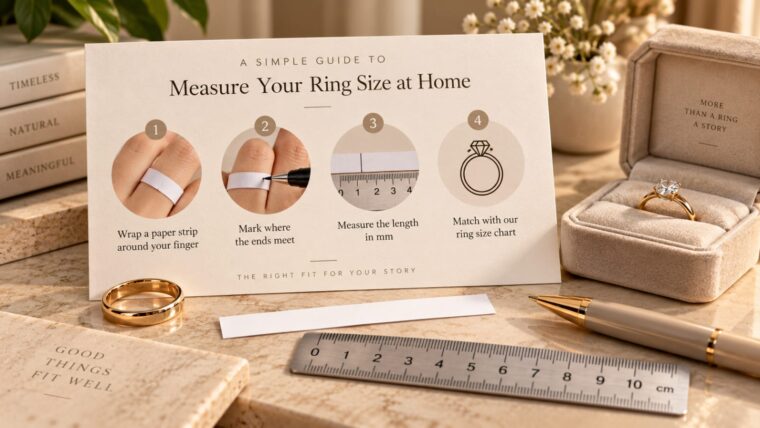
A men’s ring should slide over the knuckle with slight resistance and sit without spinning. Fingers swell in heat and shrink in cold, so measure at the end of the day at room temperature. Wide bands fit tighter than narrow ones; go up half a size for a band wider than 8 mm. Our ring size chart shows how to measure at home.
Two rings that look alike in a photograph can differ in price several times over. Six things explain most of the gap.
Set your budget first, then choose the best colour you can afford in a size that suits your hand. Colour is what people notice.
Use these seven questions with any seller. A good one answers all of them without hesitation.
Sapphire or ruby. Both score 9 on the Mohs scale and resist scratching from ordinary dust.
Silver is the traditional and more affordable choice and suits every stone in this guide. Gold lasts without tarnish and costs more. Choose by budget and by the colour you like against the stone.
There is no rule. The ring finger and little finger of either hand are the most common. Choose the finger where the ring feels secure and does not get in the way of your work.
Take it off for the gym, swimming and cleaning. Wipe it with a soft cloth, and wash hard stones in warm water with a drop of mild soap. Keep turquoise and coral dry.
Yes, if you want a dark red at a lower price. Garnet is softer than ruby and its red is deeper and browner. Side by side, ruby looks brighter.
Most can, by one or two sizes. Rings with stones set around the band and some heavy signets are difficult. Ask before you buy, and measure carefully to avoid it.
A lab-created ruby is real ruby and costs much less, but it is not rare. A natural stone is unique and holds its value better. What matters is that the seller tells you which one you are buying.
Hard stones are not harmed by water, but soap leaves a film that dulls them, and chlorine is bad for silver. Take the ring off. Turquoise and coral should never be soaked.
Every Gemswears ring is cut and set by hand in our own workshop, in the silver or gold you choose, and delivered free worldwide. Start with the stone that fits your life:
If you have a stone, a design or an engraving in mind, order a custom ring and we will make it to your size.
Keep Reading
Three words decide most of what you pay for a coloured stone. Here is how to read them.
Read the Article : Natural, Lab-Created or TreatedA paper strip and a ruler are all you need to get the size right first time.
Read the Article : Measure Your Ring Size at HomeWhere Yemeni aqeeq comes from, and how to tell a good one from a dyed one.
Read the Article : Aqeeq: Origins and Meaning