How to Tell if an Emerald Is Real: A 2026 Buyer’s Guide
Real emeralds have flaws. Learn to spot glass, doublets and lab-created stones, what oiling means, and what to ask before you buy.
·
7 minute read
Emerald is the most imitated green stone in the world, and it is also the hardest of the precious stones to judge, because a real emerald is expected to have flaws. A perfect, glassy green stone at a modest price is far more likely to be glass or a laboratory product than a bargain.
This guide shows what a natural emerald looks like, the stones that are sold in its place, the checks you can do yourself, and the questions to ask before you buy an emerald ring.
The short answer
Expect inclusions. Almost every natural emerald has visible internal marks, known as the garden. A flawless one is rare and very expensive.
Oiling is normal. Most emeralds are treated with oil or resin to make fine cracks less visible. It is accepted when disclosed.
Bubbles mean glass. Round bubbles under a magnifier point to glass, not emerald.
Emerald does not flash rainbow colours. A green stone that throws strong coloured fire is something else.
For an expensive stone, ask for an independent laboratory report.
What a natural emerald looks like
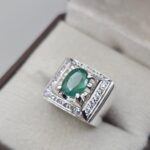
Emerald is the green variety of the mineral beryl, coloured by traces of chromium and vanadium. Its colour runs from pure green to slightly bluish green. Stones that are pale or yellowish are usually sold more honestly as green beryl.
Emerald forms under violent geological conditions, so it nearly always contains tiny fractures, crystals and wisps. Jewellers call this the jardin, the French word for garden. These marks are not a defect to hide. They are the best everyday evidence that a stone grew in the earth.
Stones that are sold as emerald
Type
What it is
Value
Natural, oiled
Mined, cracks filled with oil
High
Natural, untreated
Mined, nothing added
Highest
Lab-created
Real emerald grown in a laboratory
Low
Doublet or triplet
Thin layers glued together
Very low
Imitation
Green glass or dyed stone
Lowest
Natural emerald, oiled
This is what most natural emeralds are. After cutting, the stone is soaked in a colourless oil or resin that enters surface-reaching cracks and makes them harder to see. Laboratories grade the amount as none, minor, moderate or significant. The less filler, the more valuable the stone.
Lab-created emerald
Grown in a laboratory, it has the same chemistry as a mined emerald. It is often cleaner and more evenly coloured than nature manages, and it costs a small fraction of the price. It should always be sold as lab-created.
Doublets and triplets
A slice of pale beryl or quartz is glued to a layer of green glue or glass to imitate a solid emerald. From above it looks convincing. From the side, a join line or a colourless band gives it away.
Glass and dyed stones
Green glass is the commonest imitation. Dyed quartz and dyed pale beryl also appear. In dyed stones the colour gathers in the cracks rather than sitting evenly through the stone.
How to check an emerald yourself
No home test can prove an emerald is natural, but four simple checks will catch most imitations.
Use a 10x magnifier
Look into the stone, not at its surface. A natural emerald shows irregular wisps, feathers and tiny crystals. Perfectly round bubbles, alone or in swirls, mean glass. A stone with nothing inside at all, sold cheaply, is most likely lab-created or glass.
Watch how it handles light
Emerald has a soft, velvety glow. It does not sparkle with rainbow flashes the way a diamond or cubic zirconia does. If a green stone throws bright spectral colours as you tilt it, it is not emerald.
Look at it from the side
Hold the stone at eye level, ideally over white paper. A doublet or triplet often shows a straight join, a change of colour between top and bottom, or a clear layer in the middle.
Check the facet edges
Glass is soft and its facet edges wear round with use. Emerald keeps sharper edges, though it can chip. Rounded, scuffed edges on a stone described as emerald are a warning.
Compare the price with the claim
A natural emerald of good colour and reasonable clarity over one carat is costly. A large, clean, vivid stone at a low price has an explanation, and it is rarely good luck.
What a laboratory report tells you
An independent report confirms that the stone is natural emerald, states the degree of clarity enhancement, and sometimes gives the country of origin. GIA, AGL, GRS, SSEF and Gubelin are the best-known names for coloured stones.
The line to read first is the one about clarity enhancement. Two emeralds that look alike can differ greatly in price if one has minor filler and the other significant.
Why emerald needs gentler care
Emerald scores 7.5 to 8 on the Mohs scale, which is hard, but its internal fractures make it more brittle than ruby or sapphire. Choose a setting that surrounds the stone with metal, such as a bezel or signet, and take the ring off for manual work.
Never clean an emerald in an ultrasonic or steam cleaner, and keep it away from hot water and strong detergents. They can draw out the oil and make hidden cracks visible. Warm water, a little mild soap and a soft cloth are enough.
Judging emerald colour
Colour is most of an emerald’s value, so it is worth looking closely. Three things matter.
Hue. The best emeralds are pure green or very slightly bluish green. A strong yellow tint lowers the value.
Tone. Medium to medium-dark is ideal. Too light and the stone is green beryl. Too dark and it loses life indoors.
Evenness. Look for colour spread evenly across the stone, without pale patches or colourless zones.
Look at the stone face up in daylight. Then look at it under indoor light. A good emerald stays green in both. A poor one turns grey or black indoors.
Why emeralds are cut the way they are
The rectangular shape with cut corners is so closely linked to this stone that it is called the emerald cut. It was developed for practical reasons. The broad, flat facets show colour well, and the trimmed corners protect the most vulnerable points of a brittle stone from chipping.
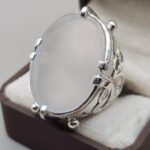
Heavily included emeralds are often cut as smooth domes called cabochons. A cabochon hides inclusions well, suits a signet ring, and is less likely to chip than a faceted stone with sharp edges.
Four mistakes buyers make
Looking for a flawless emerald. It leads straight to glass and lab-created stones. Accept the garden.
Ignoring the filler. Heavy filling can make a poor stone look fine for a while. Ask how much has been used.
Buying on size. A small emerald with strong colour is worth more, and looks better, than a large pale one.
Cleaning it like other stones. Ultrasonic cleaners and steam can ruin an emerald in minutes.
Questions to ask before you buy
Is this a natural emerald, a lab-created emerald or another stone?
Has it been oiled or filled, and to what degree?
Is it one solid stone, or a doublet or triplet?
Where was it mined, and how do you know?
What is your return policy if a jeweller tells me something different?
Common questions
Do real emeralds have flaws?
Yes. Nearly all natural emeralds have visible inclusions. Their absence in an inexpensive stone is a reason for doubt, not a reason to buy.
Is an oiled emerald still natural?
Yes. Oiling is a traditional treatment that makes existing cracks less visible. It does not add colour. It should be disclosed, and heavy filling lowers the price.
Are lab-created emeralds real?
They are real emerald in chemistry, but they are grown in a laboratory and are not rare. They cost far less than natural stones and must be sold as lab-created.
Can I wear an emerald ring every day?
You can, with care. Choose a protective setting and take the ring off for the gym, heavy lifting and cleaning. For a ring you never want to think about, sapphire or ruby is tougher.
Which emerald is best?
Colour decides it: a strong, even green that is neither too dark nor too pale. Colombian stones are the most famous, and fine emeralds also come from Zambia, Brazil, Afghanistan and the Swat valley of Pakistan.
Why is my emerald looking dull?
The oil may have dried out, or soap film has built up on the surface. Clean it gently first. If it still looks dry, a jeweller can have the stone re-oiled.
What is the difference between emerald and green beryl?
They are the same mineral. Stones with enough depth of green are called emerald. Pale ones are sold as green beryl and cost far less.
Does an emerald need to be re-oiled?
Sometimes, after many years. If the stone begins to look dry or its cracks become more visible, a jeweller can arrange it.
Choose your emerald ring
Every Gemswears emerald ring is cut and set by hand in our own workshop, in the silver or gold you choose, and delivered free worldwide. Ask us about the treatment of any stone before you order.